Tarot vs. Oracle Cards: What Is the Difference?
Tarot has 78 cards with a fixed structure. Oracle decks have no rules. Both are powerful tools for guidance, but they work very differently. Here is how to decide which one is right for your practice.
The Short Answer
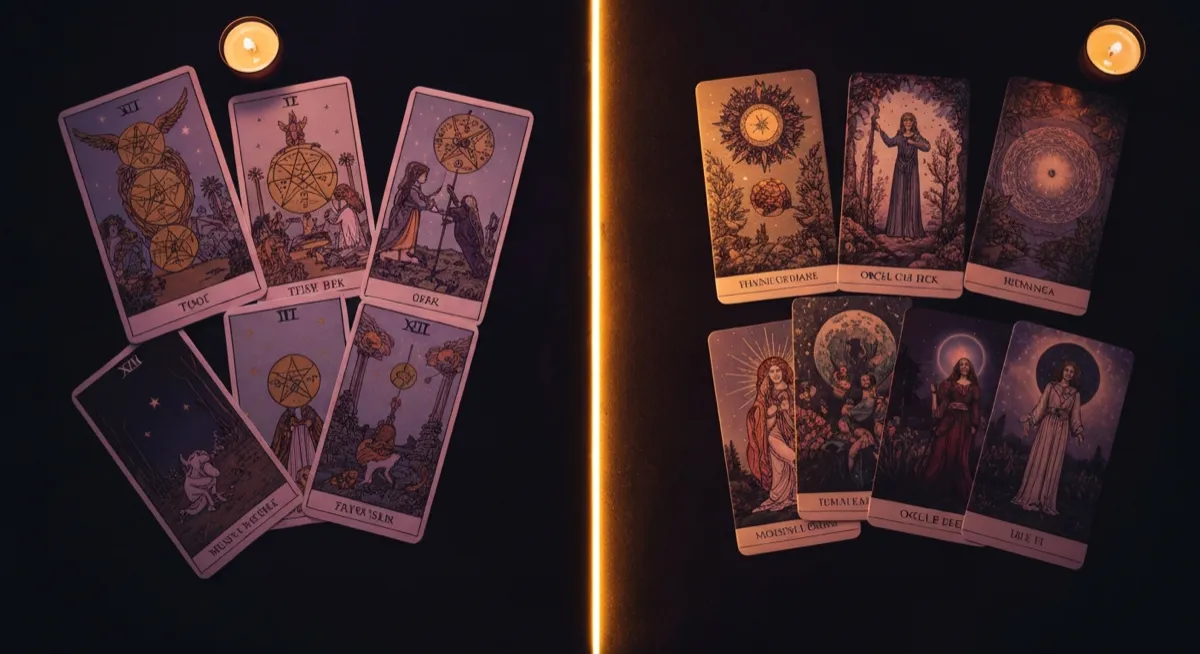
Tarot is a structured system with 78 cards, fixed suits, and centuries of established symbolism. Every tarot deck in the world shares the same bones: 22 Major Arcana cards and 56 Minor Arcana cards divided into four suits. The names might vary slightly between decks, and the art style certainly does, but the underlying architecture is universal. When you learn tarot, you learn a language that works across any deck.
Oracle cards have no fixed structure whatsoever. An oracle deck can contain any number of cards — 36, 44, 52, 80, or any other number the creator chooses. There are no required suits, no standard numbering, and no universal framework. Each oracle deck is a self-contained world designed by its creator, with its own themes, its own vocabulary, and its own rules.
This fundamental difference shapes everything: how you learn them, how you read them, how transferable your knowledge is between decks, and what kind of guidance they provide.
Structure: Rules vs. Freedom
Tarot's greatest strength is its structure. The four suits correspond to four elements (Wands/Fire, Cups/Water, Swords/Air, Pentacles/Earth), which in turn correspond to four areas of life (passion, emotions, intellect, material world). The numbered cards tell a story from Ace (beginning) through Ten (completion). The Court Cards represent personality types or stages of maturity. The Major Arcana maps the soul's journey from innocent Fool to enlightened World.
This means that even if you are reading with a deck you have never seen before, you can interpret the cards based on your existing knowledge. A Three of Cups is about celebration and friendship in every tarot deck on earth. That consistency is incredibly powerful for building reading fluency.
Oracle cards trade structure for creative freedom. A deck might be themed around animals, angels, goddesses, chakras, crystals, affirmations, or any other concept. The creator decides what each card means, how many there are, and how they should be read. This makes every oracle deck a fresh experience, but it also means you need to learn each deck essentially from scratch.
Reading Style: Nuanced vs. Direct
Tarot readings tend to be nuanced and layered. A single tarot card carries multiple meanings depending on its position in a spread, whether it is upright or reversed, which cards surround it, and the specific question being asked. The Ten of Swords in a love reading means something different than the Ten of Swords in a career reading. This depth makes tarot excellent for complex questions that require a detailed, multi-faceted answer.
Oracle readings tend to be more direct and emotionally immediate. Many oracle cards carry a short message or affirmation right on the card face, so the meaning is accessible without any interpretation skills. You draw a card that says "Trust Your Intuition" or "Abundance Is Coming," and the message is clear. This directness makes oracle cards excellent for daily inspiration, emotional support, and quick guidance.
Neither style is better than the other. It is like the difference between a novel and a poem. A novel gives you a full story with characters, plot, and resolution. A poem gives you a concentrated burst of feeling and insight. Both are literature. Both are valuable. They just serve different purposes.
Learning Curve
Tarot has a steeper learning curve because there is genuinely a lot to learn. Seventy-eight cards, each with upright and reversed meanings. Four suits with elemental correspondences. Numerological patterns running through the Minor Arcana. Archetypal journeys mapped in the Major Arcana. Spread positions that change how each card is interpreted. It takes months of regular practice to read tarot fluently, and years to develop true mastery.
Oracle cards have an almost nonexistent learning curve. Most oracle decks come with a guidebook that explains each card, and many cards are self-explanatory from their imagery or text alone. You can do a meaningful oracle reading the same day you open the box. This accessibility is one of the main reasons oracle cards have become so popular, especially among people who are interested in spiritual tools but feel intimidated by tarot's complexity.
If you are someone who enjoys learning systems, recognizing patterns, and building expertise over time, tarot will reward your investment deeply. If you want guidance that is immediately accessible without weeks of study, oracle cards will serve you well from day one.
Can You Use Both?
Absolutely, and many readers do. The most common approach is to use tarot as your primary reading tool for detailed guidance and oracle cards as a supplementary tool for additional messages, daily inspiration, or clarification.
A popular technique is to do a tarot spread for your main reading, then pull a single oracle card as a closing message or "overall theme" that ties the reading together. The tarot provides the detailed story, and the oracle card provides the emotional takeaway.
Some readers also use oracle cards at the start of a reading to set the tone, then follow with tarot for specifics. Others keep a tarot deck for client readings and an oracle deck for personal daily pulls. There is no wrong way to combine them.
The one thing to avoid is mixing tarot and oracle cards into a single shuffled deck. Their different structures make them incompatible within the same spread. Keep them as separate tools that complement each other rather than trying to merge them into one.
Which Should You Start With?
If you are drawn to learning a skill that deepens over a lifetime, start with tarot. The structure gives you a framework to build on, the symbolism rewards study, and the community of tarot readers is vast and active. Every card you learn connects to other cards through numerology, elements, and archetypes, creating a web of knowledge that makes you a stronger reader with every session.
If you want immediate, accessible guidance without a learning investment, start with oracle cards. Pick a deck whose theme resonates with you — animals, affirmations, astrology, or anything else that speaks to your interests — and start pulling daily cards. You will get meaningful messages from day one.
If you cannot decide, start with tarot. Here is why: tarot knowledge transfers to any tarot deck, and the skills you build (pattern recognition, symbolic thinking, intuitive interpretation) make you a better oracle card reader too. The reverse is not true — oracle skills do not teach you tarot structure.
But ultimately, the right choice is whichever one excites you more when you look at the cards. Tarot and oracle decks are both doorways to the same destination: greater self-understanding. Pick the door that calls to you.
Continue Exploring
More From the Blog
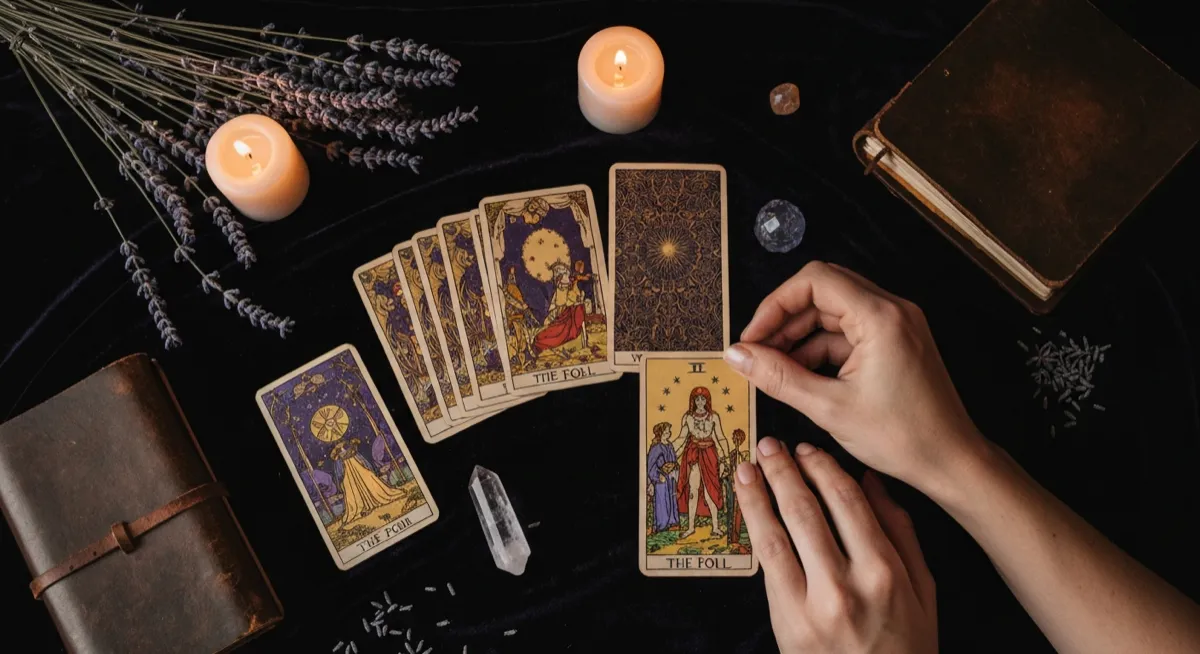
How to Read Tarot Cards for Beginners
Everything you need to start reading tarot cards today. From choosing your first deck to performing your first three-card spread, this guide walks you through each step without overwhelming you.
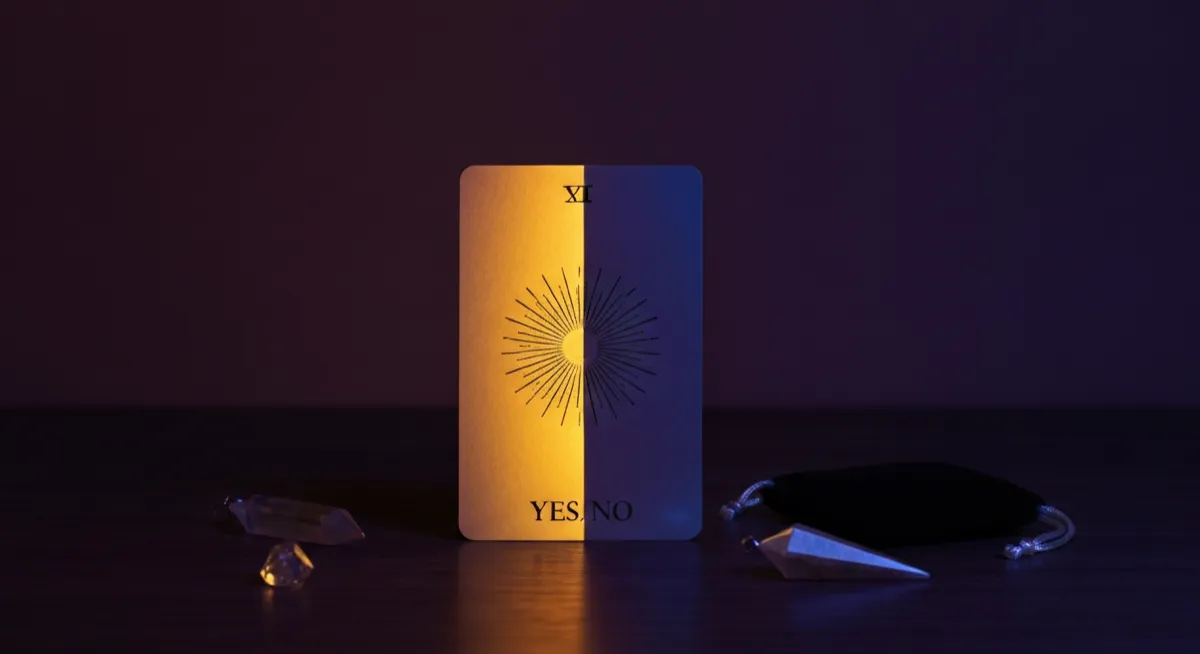
Yes or No Tarot: How It Works and What Each Card Means
Sometimes you need a straight answer. Yes or no tarot gives you one — but context matters. Learn how this popular spread works, what every card means, and when a simple yes or no is the right question to ask.
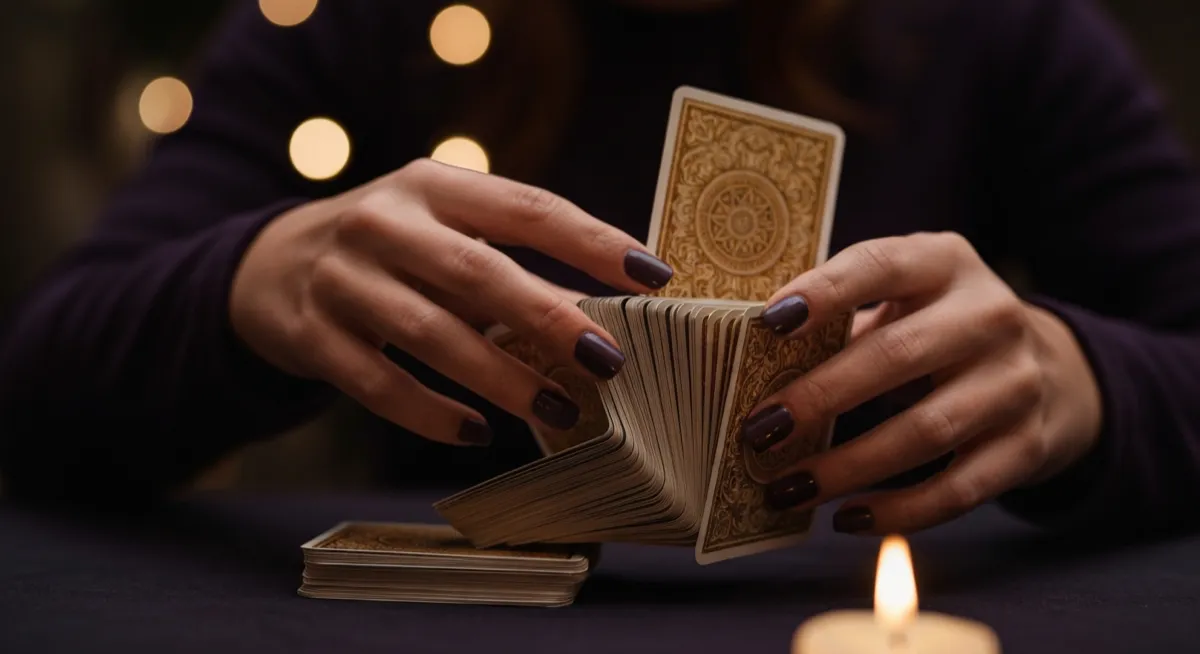
How to Shuffle Tarot Cards: 5 Methods for Every Reader
There is no wrong way to shuffle tarot cards, but some methods feel more natural than others. Here are five shuffling techniques, tips for breaking in a new deck, and how to know when to stop.