How to Shuffle Tarot Cards: 5 Methods for Every Reader
There is no wrong way to shuffle tarot cards, but some methods feel more natural than others. Here are five shuffling techniques, tips for breaking in a new deck, and how to know when to stop.
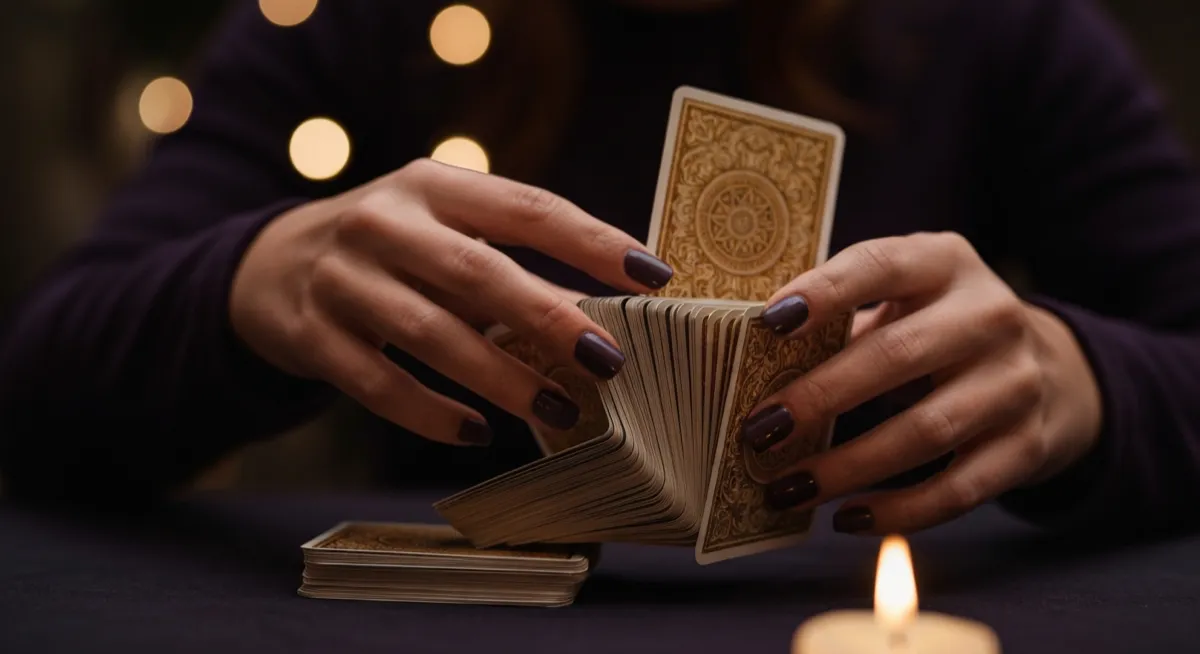
Does It Matter How You Shuffle?
Technically, no. Practically, yes. The purpose of shuffling is twofold: to randomize the cards so each reading is fresh, and to create a meditative space where you connect with your question. Both goals can be achieved with any shuffling method, but the way you shuffle affects how the experience feels, and that feeling matters more than people realize.
A shuffling method that feels natural and comfortable allows you to focus on your question without getting distracted by clumsy card handling. A method that feels awkward breaks your concentration and pulls you out of the intuitive headspace that produces the best readings.
The methods below range from the simplest (anyone can do it) to more advanced techniques. Try all of them and settle on the one or two that feel like extensions of your own hands. That is your shuffle.
Method 1: The Overhand Shuffle
This is the most common and beginner-friendly shuffle. Hold the deck in one hand and use the other to pull small groups of cards from the top or bottom, dropping them back onto the deck in a new order. It is the same motion most people use with regular playing cards.
The overhand shuffle is gentle on your cards, easy to control, and works well with the larger size of most tarot decks. Its only downside is that it does not randomize the deck as thoroughly as other methods, so you may want to do several passes — around seven to ten overhand shuffles will mix the deck sufficiently.
This method naturally produces reversals as cards occasionally flip during the transfer. If you do not want to read with reversals, simply keep all cards facing the same direction as you shuffle and straighten any that flip.
Method 2: The Pile Shuffle
Deal the entire deck into several face-down piles — usually five to seven — distributing one card at a time to each pile in rotation. Once all cards are dealt, gather the piles back together in any order you choose.
The pile shuffle is the most methodical approach and guarantees a thorough mix. It is especially useful for breaking in a new deck that arrives in a specific order, since it completely disrupts the original card sequence in a single pass.
Many readers use the pile shuffle as a "reset" before or after important readings, then follow it with an overhand shuffle while focusing on their question. The combination of a mechanical pile shuffle for randomization and an intuitive hand shuffle for connection is a powerful pairing.
Method 3: The Messy Pile (Wash Shuffle)
Spread all 78 cards face-down on a flat surface and swirl them around with both hands, like a child mixing up puzzle pieces. Let them slide over and under each other without any structure or pattern. When it feels right, gather them back into a single deck.
This is the most intuitive and meditative shuffling method. There is something deeply satisfying about plunging your hands into a sea of cards and letting your fingers move without direction. It also produces the most random distribution of any method, and it naturally creates a mix of upright and reversed cards.
The messy pile requires a clean, spacious surface and is harder to do if you are reading at a small table or on your lap. It can also be rough on delicate cards over time, as the sliding and swirling causes more wear than other methods. But if you have the space, this shuffle is beloved by readers who prioritize the ritual and sensory experience of tarot.
Method 4: The Hindu Shuffle
Hold the deck in one hand with your fingers on the short edges. Use the thumb and forefinger of your other hand to pull small packets of cards from the middle of the deck, letting them fall to the bottom. Repeat until you feel done.
The Hindu shuffle is smoother and faster than the overhand once you get the hang of it. It originated in Asia and is the standard shuffle in many card-playing traditions. For tarot, it offers a nice middle ground between the simplicity of the overhand and the thoroughness of the pile methods.
This technique does take a little practice, especially with tarot cards that are larger and slicker than standard playing cards. Give yourself a few days of practice before using it in a reading. Once it clicks, it becomes second nature.
Method 5: The Riffle Shuffle
Split the deck in half, hold one half in each hand, and let the cards interleave as they fall together — exactly like shuffling a poker deck. This is the fastest and most efficient shuffle, producing excellent randomization in just a few passes.
A word of caution: tarot cards are wider, taller, and often thicker than playing cards. The riffle shuffle puts more stress on the cards and can cause bending or creasing, especially with matte-finished or gilded decks. If you use this method, be gentle and do not force the cards together. A light, imperfect riffle is better than a forceful one that damages your deck.
Some readers avoid the riffle entirely because they feel it is too rough on cards they consider sacred tools. Others use it every day without issues. This comes down to personal preference and how precious your specific deck is to you.
When to Stop Shuffling
The honest answer is: when it feels right. This sounds unhelpfully vague, but experienced readers will tell you that there is a moment during shuffling when you feel a subtle internal "click" — a sense that the cards are ready. Learning to recognize that feeling is part of developing your intuition.
If you are new and do not yet trust that feeling, use a practical guideline: shuffle at least seven times using any method. Seven passes is mathematically sufficient to randomize a deck of this size. After seven shuffles, you can stop with confidence that the cards are properly mixed.
Some readers shuffle until a card falls out. These "jumper cards" are considered by many to be significant — the deck is literally throwing a card at you. If a card jumps out while you are shuffling, you can choose to read it as part of your spread, set it aside as an additional message, or simply put it back and keep shuffling. There are no rules here, only preferences.
Breaking In a New Deck
New tarot decks arrive stiff and in a fixed order. Before doing your first reading with a fresh deck, take the time to break it in.
Start by handling every card. Go through the entire deck face-up, looking at each image and getting a feel for the art style and card stock. This is not just about physical preparation — you are also introducing yourself to the deck and letting the imagery settle into your subconscious.
Then do a thorough pile shuffle to disrupt the factory order, followed by several rounds of your preferred shuffling method. Some readers also like to sleep with a new deck under their pillow, carry it with them for a day, or leave it on a windowsill under moonlight. These rituals are not necessary, but many people find they help create a personal connection with a new deck.
After breaking in the deck, do a simple three-card pull to test the waters. Ask something low-stakes like "What energy does this deck bring?" and see how the reading feels. If the cards feel responsive and the reading resonates, your deck is ready.
Continue Exploring
More From the Blog

How to Read Tarot Cards for Beginners
Everything you need to start reading tarot cards today. From choosing your first deck to performing your first three-card spread, this guide walks you through each step without overwhelming you.

Yes or No Tarot: How It Works and What Each Card Means
Sometimes you need a straight answer. Yes or no tarot gives you one — but context matters. Learn how this popular spread works, what every card means, and when a simple yes or no is the right question to ask.

Tarot Spreads for Beginners: 6 Layouts You Can Try Today
Tarot spreads give structure to your readings. Start with these six beginner-friendly layouts — from a simple daily card pull to the powerful Celtic Cross — and learn which spread to use for every type of question.