Tarot Spreads for Beginners: 6 Layouts You Can Try Today
Tarot spreads give structure to your readings. Start with these six beginner-friendly layouts — from a simple daily card pull to the powerful Celtic Cross — and learn which spread to use for every type of question.
What Is a Tarot Spread?
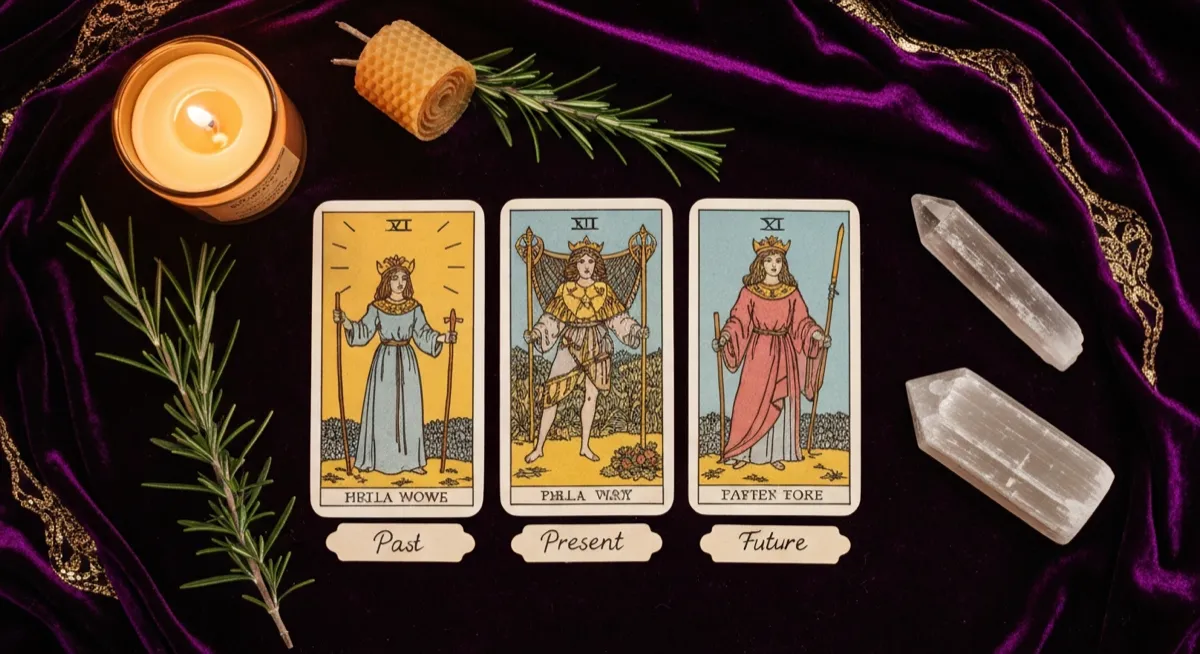
A tarot spread is a predetermined layout that assigns a specific meaning to each card position. Without a spread, you are just drawing random cards. With a spread, each card has a role — one card might represent the past, another the present, and a third the future. These assigned positions transform a collection of individual card meanings into a coherent story.
Think of it like the difference between throwing paint at a canvas and composing a painting. The cards are the paint. The spread is the composition. Both are necessary to create something meaningful.
Spreads range from a single card (perfect for quick daily guidance) to ten or more cards (for complex, multi-layered readings). Beginners often assume that bigger spreads produce better readings, but that is not true. A focused three-card reading can be more insightful than a sprawling ten-card spread if the question is right and the reader pays attention to each card. Start simple and add complexity as your confidence grows.
Spread 1: The Daily Card Pull (1 Card)
The simplest possible spread. One card, one message. Ask "What do I need to know today?" and draw a single card.
This spread is the foundation of every tarot practice. It teaches you card meanings organically (you will encounter all 78 cards within a few months), trains your intuition, and creates a daily ritual of mindful reflection that many people find more centering than meditation.
The daily card pull is not meant to predict what will happen today. It highlights the energy or theme that is most relevant to you right now. If you pull the Six of Swords, a card about transition and moving forward, you might notice opportunities throughout the day to leave behind something that no longer serves you. The card did not cause those opportunities — it simply drew your attention to them.
Keep a journal of your daily pulls. After a month, look back and notice patterns. Which cards appear most frequently? Do certain cards show up during stressful weeks? This data becomes a personal reference guide that no book can provide.
Spread 2: The Yes or No Spread (1 Card)
Another single-card spread, but with a different purpose. Instead of asking for general guidance, you ask a specific yes-or-no question and draw one card.
Upright cards generally indicate yes, and reversed cards generally indicate no, but each card has its own specific answer. The Sun is always an enthusiastic yes. The Tower is always a disruptive no (or at least a "not the way you are imagining"). The High Priestess says "you do not have enough information yet — wait."
This spread works best for concrete, actionable questions. "Should I apply for this job?" is a great yes-or-no question. "Will I be happy?" is too vague. The more specific your question, the more useful the answer.
If you find yourself wanting more context after a yes or no reading, you can always follow up with a three-card spread to explore the why behind the answer. Use the yes-or-no as your starting point, not your final word.
Spread 3: The Three-Card Spread (Past, Present, Future)
Three cards laid in a row from left to right. The first card represents the past, the second the present, and the third the future. This is the most popular spread in tarot, and for good reason — it provides a narrative arc that helps you understand how you got here, where you stand, and where you are headed.
The past card reveals the root cause or background energy influencing your situation. It is not always about literal past events — sometimes it represents a mindset, a habit, or an emotional pattern that has been building over time.
The present card shows your current state with unflinching honesty. This is the card that makes you nod and say "yes, that is exactly what is happening." It validates your experience while also highlighting aspects of the situation you might not be consciously acknowledging.
The future card is not a fixed prediction. It shows the most likely outcome based on the trajectory you are currently on. If you do not like what you see, that is valuable information — it means you still have time to change course.
This spread is also incredibly versatile. You can reassign the three positions to explore different triads: Situation, Action, Outcome. Mind, Body, Spirit. You, Your Partner, The Relationship. The framework stays the same; only the labels change.
Spread 4: The Love Spread (3 Cards)
Three cards arranged in a triangle or a row, with each position assigned to a different aspect of your romantic life. The first card represents you and the energy you are bringing to the relationship. The second represents your partner (or the person you are interested in) and their energy. The third represents the relationship itself — the space between you.
This spread is powerful because it separates individual energies from the energy of the connection. You might discover that both you and your partner have wonderful, loving energy as individuals, but the relationship card reveals a mismatch in timing or communication. Or you might find that a relationship you thought was failing has strong foundational energy that just needs attention.
The love spread works whether you are in a relationship, interested in someone new, or wondering about an ex. Adjust your mindset when shuffling to focus on the specific person and situation, and the cards will respond to that intention.
A practical tip: if you are tempted to do a love reading every single day about the same person, resist. Give the energies time to shift between readings. Once every two to four weeks is a healthy cadence for relationship readings.
Spread 5: The Career Spread (3 Cards)
Three cards representing your current professional situation, the main challenge you face, and the advice the tarot offers for moving forward.
The first card gives you an honest assessment of where you stand in your career right now. It might confirm what you already know ("yes, you are stuck") or reveal something you have been avoiding ("you are actually in a better position than you think").
The second card identifies the specific obstacle blocking your progress. This is often the most valuable card in the spread because it names the problem directly. Sometimes the obstacle is external — a difficult boss, a shrinking industry, a lack of opportunities. But just as often, it is internal — fear of failure, imposter syndrome, or an unwillingness to take a necessary risk.
The third card offers guidance. It will not hand you a career plan, but it will point you toward the energy, mindset, or action that will be most productive right now. If you draw the Eight of Pentacles (mastery through diligent practice), the tarot is telling you to invest in your skills. If you draw the Ace of Wands (bold new beginnings), it is time to start that project you have been putting off.
This spread is especially useful at career crossroads — when you are deciding between job offers, considering a career change, or feeling burned out and unsure why.
Spread 6: The Celtic Cross (10 Cards)
The Celtic Cross is the most iconic and comprehensive tarot spread. Ten cards arranged in a cross and staff pattern, each with a specific role. It is not a beginner spread in the sense that it requires familiarity with card meanings and the ability to weave multiple cards into a single narrative. But it is included here because every tarot reader should know about it, even if you are not ready to use it yet.
The six cards of the cross cover your present situation, the challenge crossing you, the root cause in the past, the near future, your conscious goals (what you are working toward), and your subconscious influences (fears or desires you may not be acknowledging). The four cards of the staff address your external environment, your inner hopes and fears, practical advice, and the final outcome.
Together, these ten positions create a 360-degree view of your situation. Nothing is left unexamined. The Celtic Cross reveals not only what is happening but why it is happening, what you are doing about it, and where it is all heading.
When should you graduate to the Celtic Cross? When you can comfortably read a three-card spread without needing to look up every card meaning, and when you have a question complex enough to warrant ten cards of analysis. A question like "Should I have pizza tonight?" does not need a Celtic Cross. A question like "I have been offered a job across the country and my partner does not want to move — what should I do?" absolutely does.
Do not rush to the Celtic Cross. It will be there when you are ready, and it will be worth the wait.
Choosing the Right Spread for Your Question
The key is matching the complexity of your question to the depth of the spread.
For quick daily guidance or simple decisions, use a one-card pull. For specific yes-or-no questions, use the yes-or-no spread. For questions with a time element (how did I get here, where am I going), use the three-card past-present-future. For relationship questions, use the love spread. For career decisions, use the career spread. For complex, multi-layered life situations, use the Celtic Cross.
If you are unsure which spread to use, default to the three-card spread. It is flexible enough to handle almost any question and simple enough to read without getting overwhelmed. You can always follow up with a more targeted spread if the three cards raise more questions than they answer.
The most important thing is to start reading. Spreads are frameworks, not formulas. The real magic happens between you and the cards, and the only way to develop that relationship is through practice.
Continue Exploring
More From the Blog
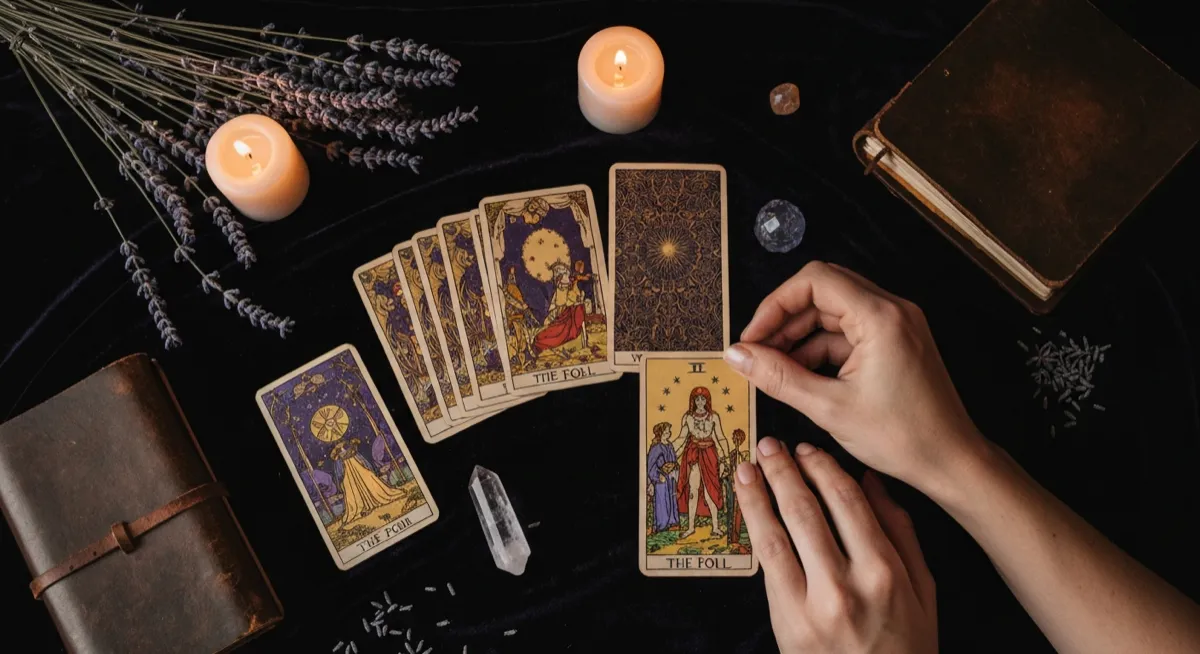
How to Read Tarot Cards for Beginners
Everything you need to start reading tarot cards today. From choosing your first deck to performing your first three-card spread, this guide walks you through each step without overwhelming you.
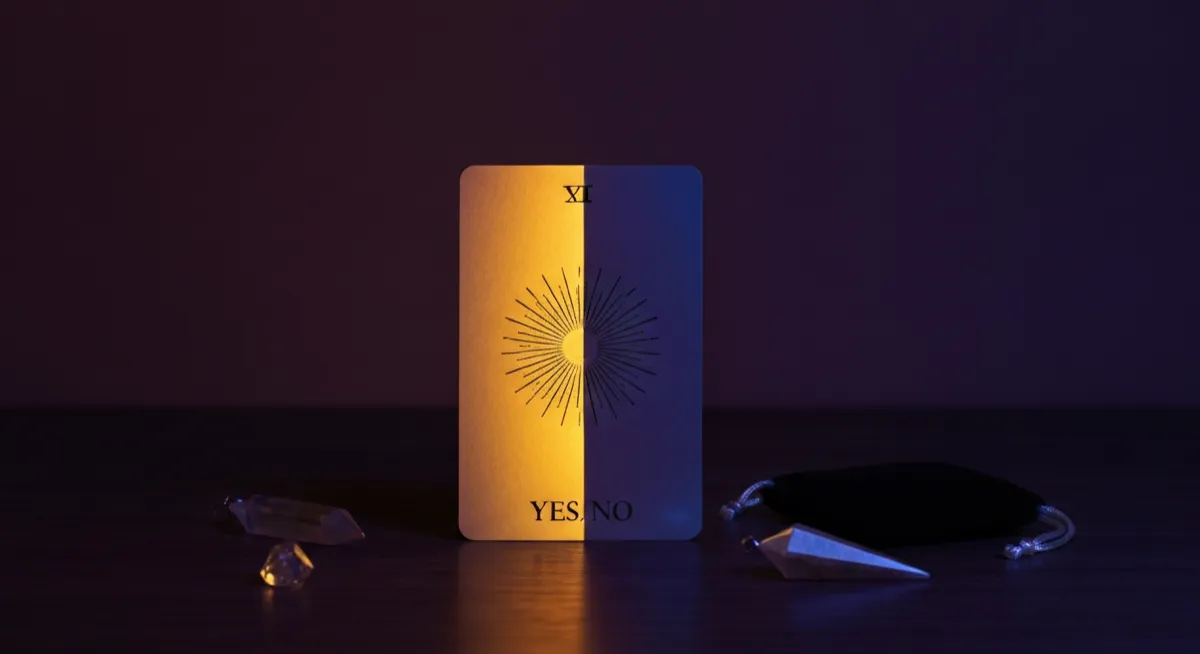
Yes or No Tarot: How It Works and What Each Card Means
Sometimes you need a straight answer. Yes or no tarot gives you one — but context matters. Learn how this popular spread works, what every card means, and when a simple yes or no is the right question to ask.
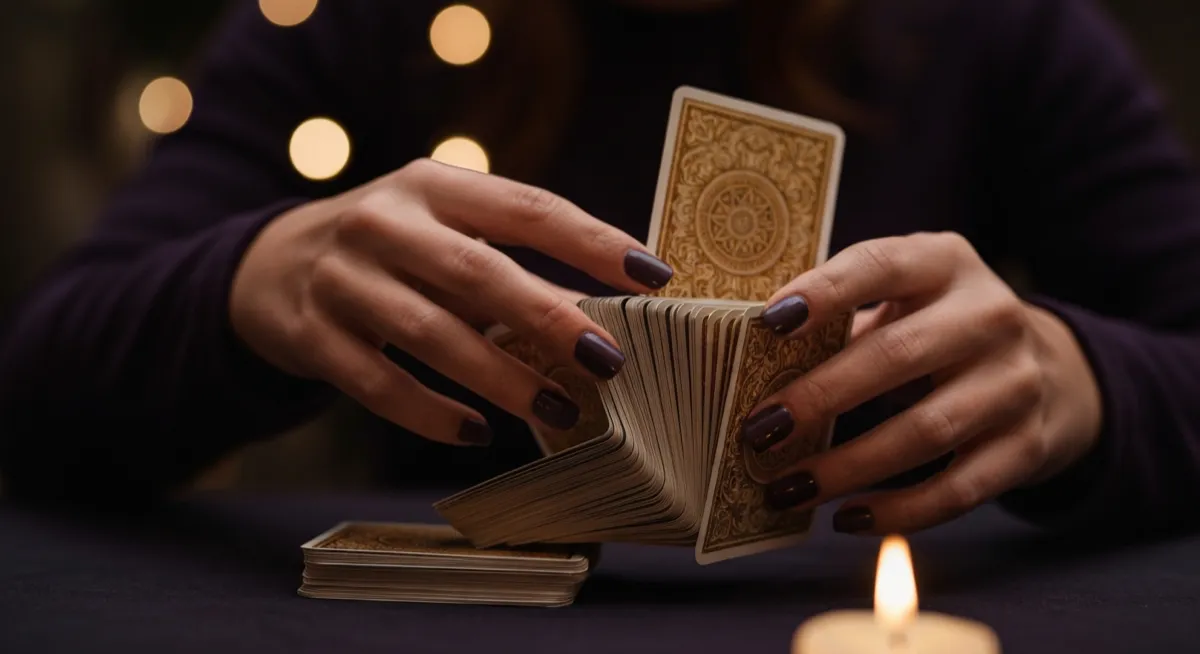
How to Shuffle Tarot Cards: 5 Methods for Every Reader
There is no wrong way to shuffle tarot cards, but some methods feel more natural than others. Here are five shuffling techniques, tips for breaking in a new deck, and how to know when to stop.