How to Read Tarot Cards for Beginners
Everything you need to start reading tarot cards today. From choosing your first deck to performing your first three-card spread, this guide walks you through each step without overwhelming you.
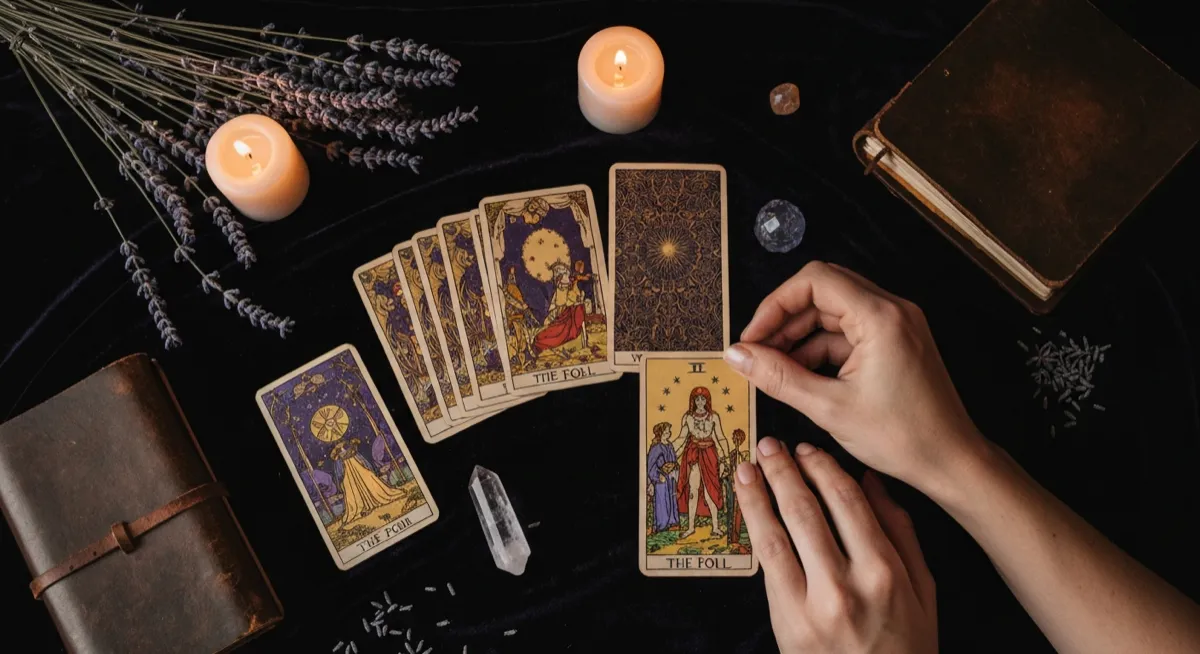
Why Learn Tarot?
Tarot is not about predicting the future with absolute certainty. It is a mirror — a tool for self-reflection that helps you see situations from angles your conscious mind might be avoiding. When you pull a card and study its imagery, you are not receiving a command from the universe. You are having a conversation with your own intuition.
People have been reading tarot for centuries, but the modern surge in popularity has nothing to do with superstition. It has everything to do with the human need for quiet reflection in a noisy world. A tarot reading creates a small, sacred pause in your day where you sit down, ask a meaningful question, and listen to what comes up. That practice alone is valuable, regardless of your spiritual beliefs.
Whether you approach tarot as a psychological tool, a spiritual practice, or simply a creative way to explore your thoughts, this guide will teach you the fundamentals you need to start reading cards with confidence.
Choosing Your First Tarot Deck
The most common recommendation for beginners is the Rider-Waite-Smith deck, and for good reason. Published in 1909, it established the visual language that most modern decks are based on. Every card in the Minor Arcana has a full illustration, which makes it much easier to read intuitively compared to decks where the pip cards only show a pattern of symbols.
That said, the best deck for you is one whose imagery speaks to you. If you find the Rider-Waite illustrations dated, there are hundreds of modern decks that follow the same structure with updated art. Look for a deck where you feel drawn to the images, where the colors and style make you want to pick it up and explore.
A few practical tips for your first deck purchase: make sure it comes with 78 cards (22 Major Arcana and 56 Minor Arcana), check that it includes a small guidebook, and avoid novelty or heavily themed decks until you have the basics down. You want a deck that follows traditional tarot structure so that everything you learn applies broadly.
Understanding the 78 Cards
A standard tarot deck has two main sections, and understanding the difference between them is your first real step toward reading fluently.
The Major Arcana consists of 22 cards numbered 0 through 21, starting with The Fool and ending with The World. These cards represent major life themes, significant turning points, and deep spiritual lessons. When a Major Arcana card appears in a reading, pay extra attention — it is pointing to something important that goes beyond everyday concerns. Think of these as the big chapters of your life story.
The Minor Arcana has 56 cards divided into four suits: Wands, Cups, Swords, and Pentacles. Each suit contains cards numbered Ace through 10, plus four Court Cards (Page, Knight, Queen, and King). The Minor Arcana deals with the day-to-day situations, emotions, challenges, and decisions that fill your daily life.
Each suit carries its own energy. Wands relate to passion, creativity, and action. Cups deal with emotions, relationships, and intuition. Swords govern the mind, communication, and conflict. Pentacles cover the material world — money, career, health, and physical reality. Once you understand these four energies, you already have a framework for interpreting any Minor Arcana card.
Upright vs. Reversed Cards
When you draw a card and it appears right-side up, it is upright. When it appears upside-down, it is reversed. This distinction adds nuance to your readings, but it is not something you need to worry about as a complete beginner.
An upright card expresses its energy openly and directly. A reversed card does not mean the opposite — it suggests that the energy is blocked, internalized, diminished, or working in a more subtle way. For example, The Empress upright radiates abundance and nurturing energy. Reversed, she might suggest you are neglecting self-care or struggling with creative blocks.
Many experienced readers choose not to use reversals at all, and that is perfectly valid. If you are just starting out, consider reading only with upright cards for your first few weeks. Once you feel comfortable interpreting the 78 cards in their upright positions, you can begin incorporating reversals to add depth to your readings.
Your First Tarot Spread: The Three-Card Pull
You do not need to memorize all 78 cards before doing your first reading. In fact, the best way to learn tarot is by reading, not by studying. Start with the simplest and most versatile spread: three cards in a row.
Shuffle your deck while thinking about your question. When you feel ready, cut the deck and deal three cards face-down from left to right. Turn them over one at a time.
The first card represents the past — the events, energies, or patterns that have led to your current situation. The second card represents the present — where you stand right now, including the challenges and blessings you are experiencing. The third card represents the future — the likely direction things are heading based on your current path.
Look at each card and notice your first reaction before you open any guidebook. What do you see in the image? What emotions come up? Your initial impression often contains more insight than a textbook definition. After sitting with your intuition, check the guidebook for additional meaning and see how it connects to what you already noticed.
Building a Daily Practice
The single most effective way to learn tarot is pulling one card every morning. Before you check your phone, before the day starts pulling you in different directions, sit down with your deck and draw a single card.
Look at the card. Read about its meaning. Then carry that card with you mentally throughout the day. Pay attention to how its themes show up in your daily experience. Did you pull the Three of Pentacles, a card about collaboration and teamwork? Notice how your interactions at work reflect that energy. Did you draw the Four of Swords, a card about rest? Maybe your body is telling you to slow down.
This daily practice accomplishes two things. First, it builds your fluency with the cards naturally and without pressure. After a few months of daily pulls, you will know most card meanings from experience rather than memorization. Second, it trains your intuition — that quiet inner voice that is the real engine of a good tarot reading.
Keep a simple journal. Write down the date, the card you pulled, and a few lines about what it meant to you. Over time, this journal becomes a fascinating record of your personal growth and an invaluable reference for your readings.
Common Mistakes to Avoid
Asking the same question repeatedly is the most common trap for new readers. If you do not like the answer you received, pulling more cards will not change the underlying situation — it will only muddy the message. Trust what comes up the first time and sit with it, even if it is uncomfortable.
Another mistake is relying too heavily on guidebook definitions. Guidebooks are useful starting points, but tarot is ultimately an intuitive practice. Two readers can pull the same card for the same question and offer different interpretations, and both can be valid. The imagery on the card, the position it occupies in the spread, and your gut reaction all contribute to its meaning in that specific reading.
Finally, do not panic when you draw cards that seem negative. The Tower, the Ten of Swords, the Devil — these cards have intense imagery, but they are not curses. Every card in the tarot, even the most challenging ones, contains wisdom and guidance. The Tower is not saying your life will fall apart. It is saying that a structure built on a weak foundation needs to come down so something stronger can take its place. Learn to read the lesson, not just the surface.
Where to Go From Here
Now that you understand the basics, your next steps are simple: practice daily, experiment with different spreads, and trust the process. Tarot is a skill that deepens over months and years, not days.
When you feel comfortable with the three-card spread, try a five-card spread or the classic Celtic Cross for more complex questions. Explore how individual cards behave differently in love, career, and personal growth contexts. And most importantly, read for real questions that matter to you — that emotional investment is what transforms card-flipping into genuine insight.
Continue Exploring
More From the Blog
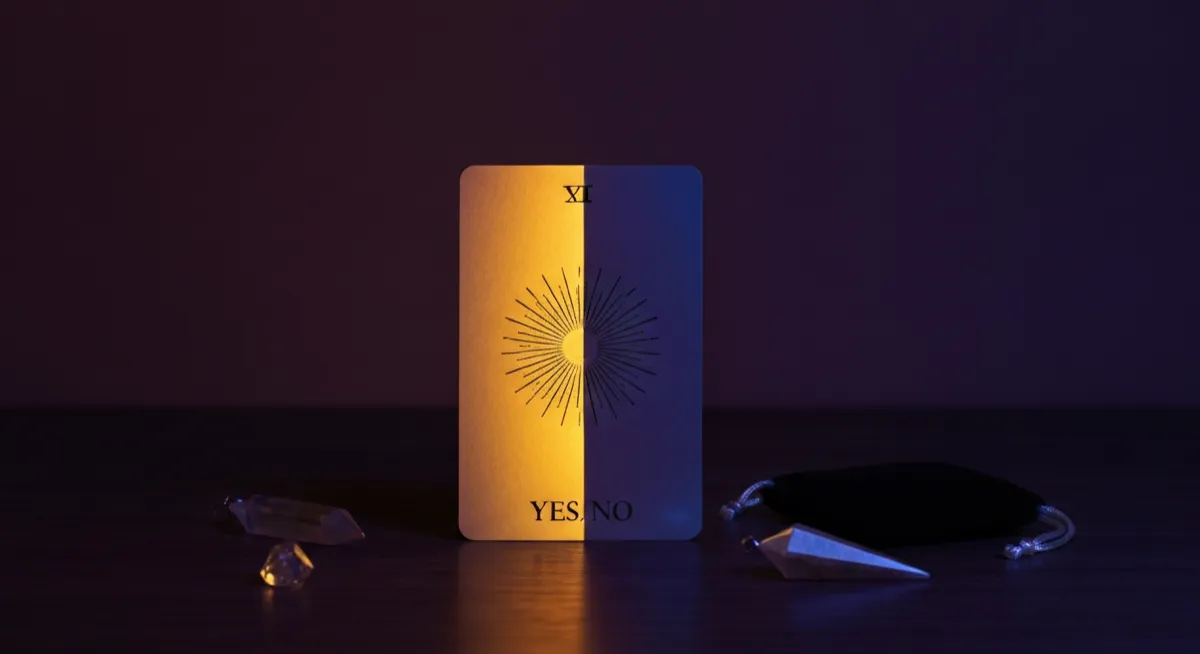
Yes or No Tarot: How It Works and What Each Card Means
Sometimes you need a straight answer. Yes or no tarot gives you one — but context matters. Learn how this popular spread works, what every card means, and when a simple yes or no is the right question to ask.
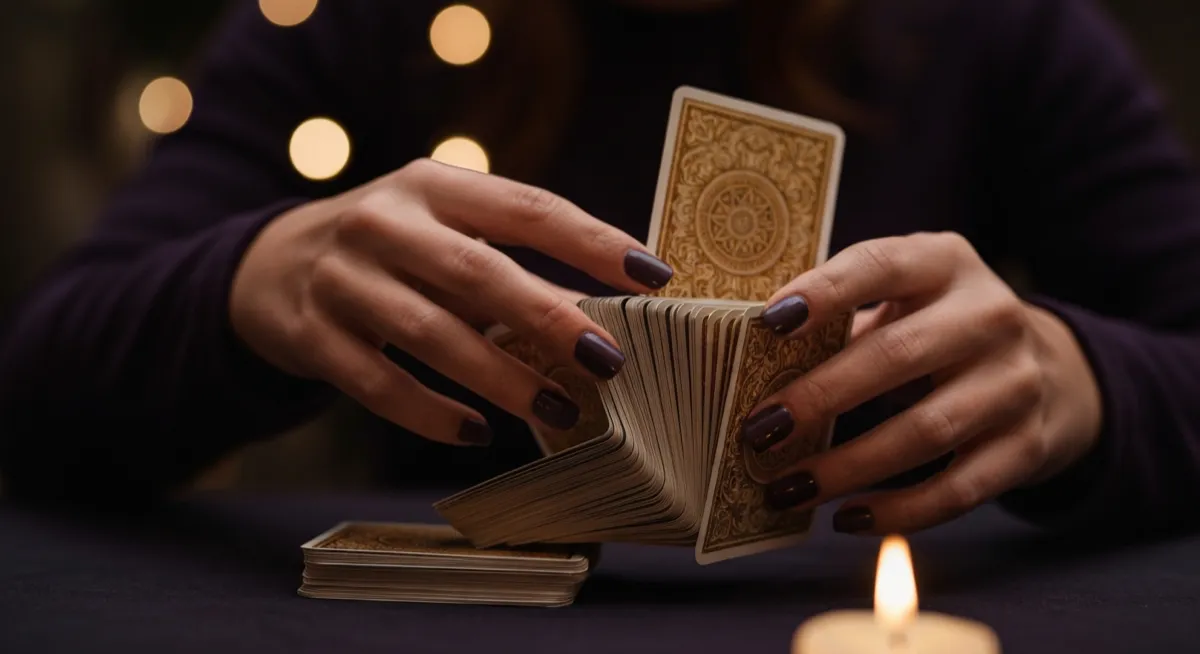
How to Shuffle Tarot Cards: 5 Methods for Every Reader
There is no wrong way to shuffle tarot cards, but some methods feel more natural than others. Here are five shuffling techniques, tips for breaking in a new deck, and how to know when to stop.
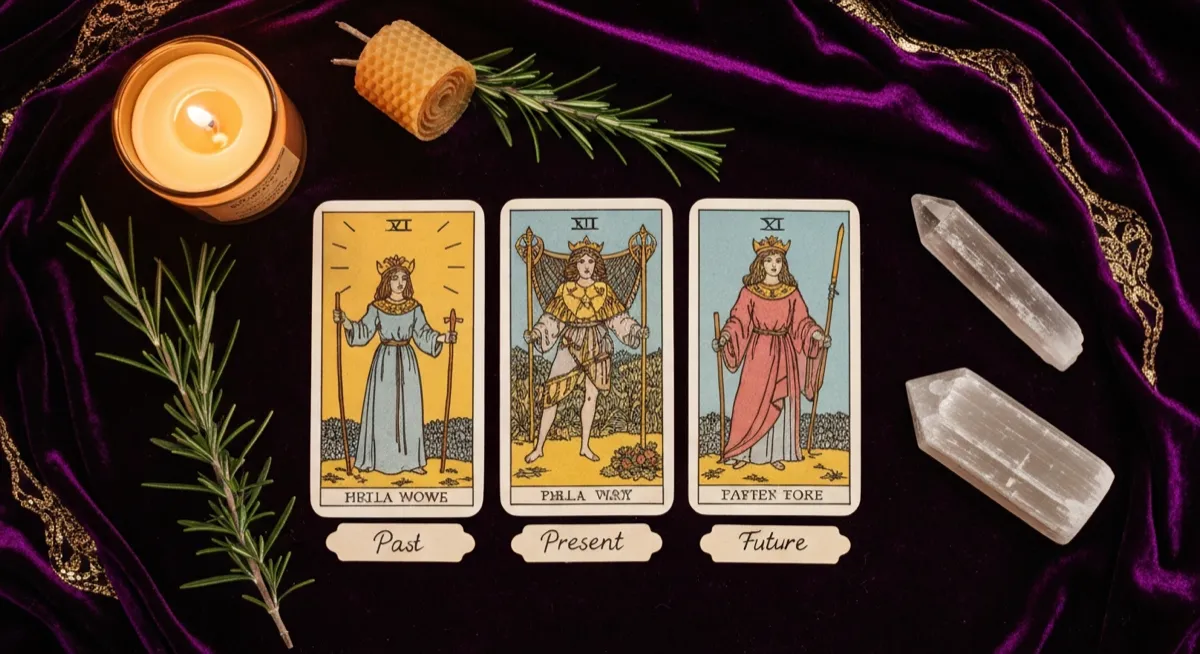
Tarot Spreads for Beginners: 6 Layouts You Can Try Today
Tarot spreads give structure to your readings. Start with these six beginner-friendly layouts — from a simple daily card pull to the powerful Celtic Cross — and learn which spread to use for every type of question.