How to Ask Tarot Cards a Question (And Get a Clear Answer)
The number one reason tarot readings feel vague is not the cards — it is the question. A well-framed question produces a clear answer. A messy question produces a messy reading. Here is how to ask the right way.

Your Question Shapes Your Answer
Tarot responds to the energy and specificity of the question you bring to it. Ask a vague question and you will get a vague answer. Ask a precise question and the cards will reward you with precision.
This is not mystical — it is practical. When your question is clear, your mind is focused during the shuffle. That focus creates a specific lens through which you interpret whatever card appears. The same card can mean entirely different things depending on whether you asked "What should I know about my career?" versus "Should I accept the offer from the marketing company by Friday?"
The first question is so broad that any of the 78 cards could apply, and you are left guessing which aspect of your career the card is addressing. The second question is specific enough that the card's message can land with directness. You are not wondering what area of life the card refers to — you know. The card just needs to deliver its verdict on that one specific thing.
Learning to ask better questions is the single fastest way to improve your tarot readings without learning a single new card meaning.
The Golden Rule: Open-Ended, Not Closed
The best tarot questions are open-ended rather than closed. Instead of asking questions that demand a simple yes or no, frame questions that invite the cards to reveal insight, perspective, and guidance.
Instead of "Will I get the job?" try "What do I need to know about this job opportunity?" The first question forces the tarot into a binary answer that may oversimplify a complex situation. The second question opens the door for the cards to address aspects you had not considered — maybe the job itself is great but the timing is wrong, or maybe you will get it but need to negotiate different terms.
Instead of "Does he love me?" try "What is the energy between us right now?" This reframe shifts the focus from a yes-or-no verdict to a nuanced exploration of the connection, which is far more useful for making real decisions about the relationship.
The exception is the yes-or-no spread, which is specifically designed for binary questions. When you are using that spread, closed questions are not just acceptable — they are required. But for all other spreads, open-ended questions produce richer, more actionable readings.
Questions to Avoid
Certain question structures consistently produce unhelpful readings. Knowing what to avoid saves you time and frustration.
Avoid timing questions. "When will I meet my soulmate?" or "When will I get promoted?" are nearly impossible for tarot to answer with specificity. The cards work with energy, themes, and dynamics — not calendars. If timing is important, reframe: "What energy should I cultivate to attract a partner?" or "What is blocking my career advancement right now?"
Avoid questions about other people's private thoughts. "What is he thinking about me right now?" puts the tarot in the position of reading someone else's mind without their consent. While some readers do this, the results are unreliable because you are projecting your own hopes and fears onto the interpretation. Reframe to focus on your side: "What do I need to understand about this connection?"
Avoid double-barreled questions. "Should I move to New York and start a freelance business?" is two questions bundled into one. The card cannot address both simultaneously. Pick the question that matters most, or do two separate readings.
Avoid questions where you have already decided the answer. If you ask "Should I break up with him?" but you already know the answer is yes and you are looking for permission, the reading will be frustrating regardless of what comes up. Be honest with yourself about whether you are seeking genuine guidance or just validation.
Power Question Formulas
When you are stuck, these formulas will help you frame strong questions for any situation.
"What do I need to know about [situation]?" This is the most versatile tarot question and works for literally any topic. It gives the cards complete freedom to address whatever aspect is most important, including things you had not considered.
"What is the energy around [specific thing]?" This works well for situations where you want to understand the vibe or dynamics without asking for advice. Great for new relationships, job opportunities, or creative projects.
"What is blocking me from [desired outcome]?" This question is powerful because it assumes the outcome is achievable and asks the cards to identify the specific obstacle. The answer is almost always actionable.
"What will help me [achieve goal]?" This is advice-focused and forward-looking. It asks the cards to be practical and constructive rather than diagnostic.
"What am I not seeing about [situation]?" This is the question for people who feel stuck or confused. It explicitly asks the cards to reveal blind spots, which is one of tarot's greatest strengths.
"What is the likely outcome if I [specific action]?" This reframes prediction questions into something tarot can actually answer. Instead of asking "Will this work?" you are asking "What happens if I go this direction?" — which acknowledges that you have agency and are choosing a path.
Matching Your Question to the Right Spread
The spread you choose should match the type of question you are asking.
For binary decisions, use the yes-or-no spread with a closed question. "Should I accept this offer?" One card, one answer.
For understanding a situation, use the three-card spread (past, present, future) with a "What do I need to know about..." question. This gives you context, current state, and trajectory.
For relationship questions, use the love spread with a question focused on the dynamic between two people. "What is the energy between us?" lets each card position (you, them, the relationship) do its specific work.
For complex life decisions, use the Celtic Cross with a broad, open question. The ten positions give the cards enough room to address every angle of a multi-layered situation.
For daily guidance, use a single-card pull with "What do I need to know today?" No fancy framing needed — the simplicity is the point.
The mismatch to avoid is asking a complex question with a simple spread, or a simple question with a complex spread. "Should I have pasta tonight?" does not need a Celtic Cross. "How do I navigate my parents' divorce while maintaining my own relationship and career stability?" cannot be answered by a single card.
What to Do Before You Ask
The thirty seconds before you shuffle are more important than most people realize. Use them well.
Get clear on what you actually want to know. This sounds obvious but it is not. Many people sit down to do a reading with a cloud of anxiety rather than a specific question. Take a moment to identify the real question beneath the anxiety. You might think you want to know about your career, but what you actually want to know is whether you are wasting your potential. Name the real question.
Write it down. Physically writing your question on paper (or typing it in your journal) forces you to commit to specific words. If you cannot write it clearly, you have not thought it through clearly enough. Rewrite until the question feels sharp and focused.
Say it aloud. This might feel awkward, but speaking your question activates a different kind of mental processing than thinking it silently. Hearing your own voice ask the question often reveals whether it is genuinely the right question or just the surface-level version.
Then shuffle. With your specific, clear, well-articulated question held firmly in your mind, let your hands do their work. The quality of the question you bring to the shuffle determines the quality of the answer you receive from the cards.
Continue Exploring
More From the Blog

How to Read Tarot Cards for Beginners
Everything you need to start reading tarot cards today. From choosing your first deck to performing your first three-card spread, this guide walks you through each step without overwhelming you.
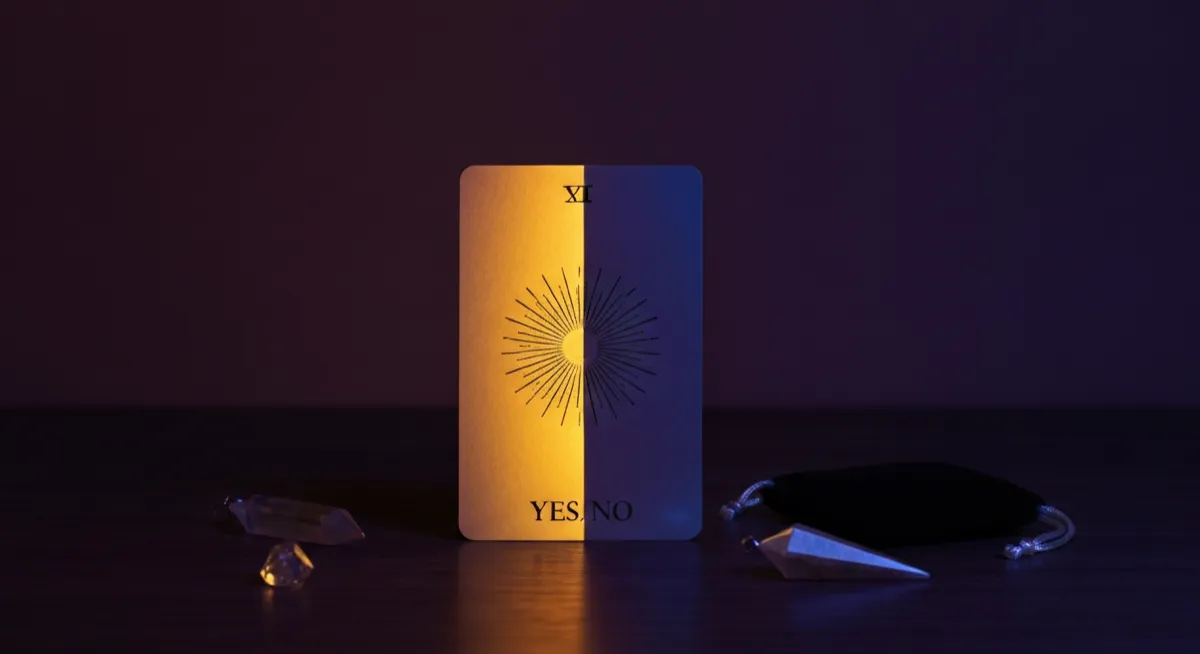
Yes or No Tarot: How It Works and What Each Card Means
Sometimes you need a straight answer. Yes or no tarot gives you one — but context matters. Learn how this popular spread works, what every card means, and when a simple yes or no is the right question to ask.

How to Shuffle Tarot Cards: 5 Methods for Every Reader
There is no wrong way to shuffle tarot cards, but some methods feel more natural than others. Here are five shuffling techniques, tips for breaking in a new deck, and how to know when to stop.