Reversed Tarot Cards: What They Really Mean
A reversed card is not a curse, a bad omen, or the opposite of its upright meaning. It is a nuance — a shift in energy that adds depth to your reading. Here is how to actually interpret them.
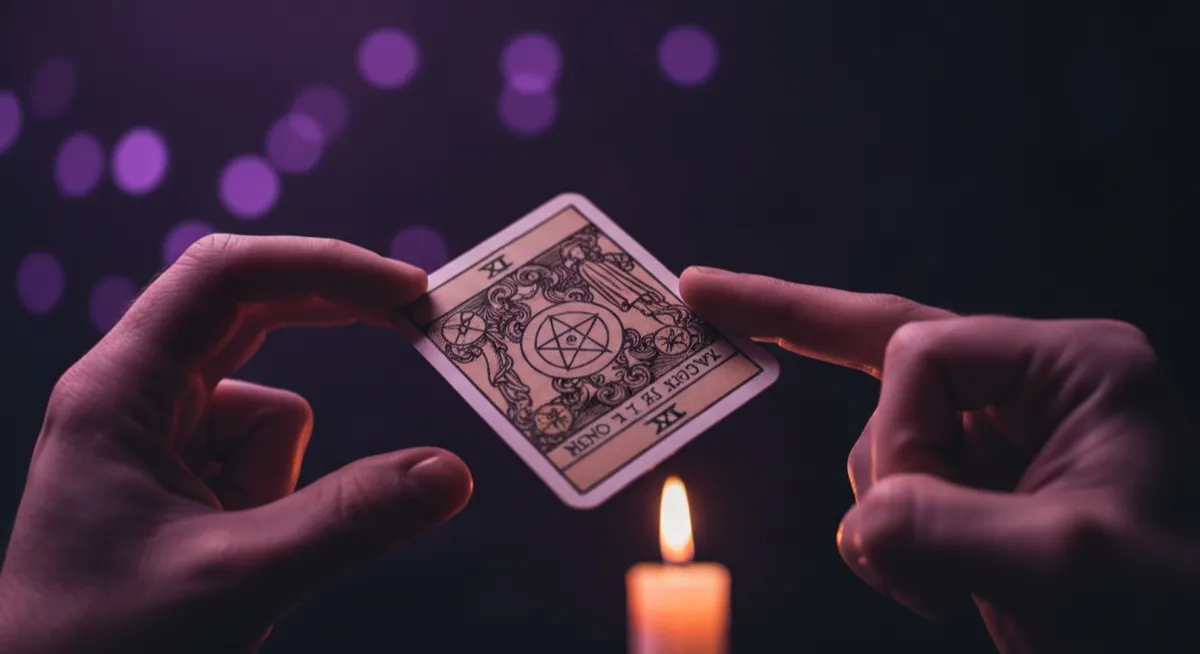
Reversed Does Not Mean Opposite
This is the single most important thing to understand about reversed tarot cards, and it is where most beginners go wrong. When a card appears upside-down in your reading, it does not simply flip the meaning to its opposite. The Sun reversed does not mean misery. The Ten of Cups reversed does not mean your family hates you. Death reversed does not mean immortality.
Reversed cards indicate a shift in how the card's energy is expressing itself. The core meaning is still present, but it is working differently — perhaps it is blocked, internalized, weakened, excessive, or delayed. Think of it like the volume knob on a speaker. The song is the same whether the volume is at two or at ten. What changes is the intensity and how it reaches you.
This subtlety is what makes reversals so valuable in readings. They give you 156 possible card meanings instead of 78, doubling the vocabulary available to the tarot for communicating its message. Without reversals, every card is either fully on or absent. With reversals, cards can whisper instead of shout, and that whisper often carries the most important information in the entire spread.
The Five Ways to Read a Reversed Card
There is no single correct way to interpret a reversed card. Different readers use different frameworks, and all of them produce accurate readings. Here are the five most common approaches.
Blocked energy. The card's energy is present but unable to express itself freely. Something — fear, external circumstances, another person, your own resistance — is preventing the energy from flowing. The Empress reversed as blocked energy might mean your creativity is stifled or your nurturing instincts are being suppressed by an overwhelming schedule.
Internalized energy. The card's energy is turned inward instead of outward. Rather than expressing itself in your external life, it is working within your psyche. The Emperor reversed as internalized energy might mean you are exercising rigid self-discipline internally while appearing passive or indecisive to others.
Delayed energy. The card's energy is coming, but not yet. The timing is off. What the upright card promises is still on its way, but obstacles or circumstances have slowed its arrival. The Ace of Pentacles reversed as delayed energy means that financial opportunity is approaching but has not materialized yet.
Excessive energy. The card's energy is present in overdose. Too much of a good thing has become a problem. Strength reversed as excessive energy might mean you are being too patient, too accommodating, too willing to absorb others' problems at the cost of your own wellbeing.
Shadow energy. The card's energy has a darker expression that needs to be acknowledged. Every archetype has a shadow side, and reversed cards can point directly to it. The Hierophant reversed as shadow energy might indicate blind conformity, cult-like thinking, or using spiritual authority to manipulate others.
How Reversals Change Each Card Type
The impact of a reversal depends partly on what kind of card it is.
Major Arcana reversed carry the most weight. When a Major Arcana card — which already represents a significant life theme — appears reversed, it signals that a major lesson is being resisted, delayed, or internalized. The Tower reversed does not mean "no upheaval." It often means the upheaval is happening internally, or that you are desperately clinging to a structure that needs to fall. Major Arcana reversals deserve extra time and attention in any reading.
Minor Arcana reversed tend to indicate everyday blockages and adjustments. The Five of Pentacles reversed might mean a financial hardship is ending, or that you are refusing to accept help that is available to you. These reversals are practical and situational rather than existential.
Court Cards reversed often point to immature, toxic, or shadow expressions of a personality type. The King of Swords upright is a fair, analytical leader. Reversed, he can become a cold, manipulative intellectual who uses logic as a weapon. Court Card reversals frequently represent a specific person in your life who is embodying the card's negative qualities.
When Reversals Are Especially Important
Pay extra attention to reversals in these situations.
When the majority of cards in a spread are reversed. If three out of five cards appear upside-down, the reading is telling you that energy is stuck or blocked across multiple areas of your life. The overall message is one of stagnation, resistance, or a need to look inward before taking outward action.
When the outcome or future card is reversed. A reversed card in the final position of a spread suggests that the expected outcome is either delayed, complicated, or not quite what it appears. It is not necessarily negative — sometimes a reversed outcome card means the result will be better than the obvious interpretation because the shadow work will lead to deeper growth.
When a card reverses that was upright in a previous reading. If you asked the same question last month and got The Star upright (hope, healing), but now The Star appears reversed (loss of faith, disconnection from hope), the reversal is tracking a real change in your emotional state. This kind of progression across readings is incredibly valuable for understanding how a situation is evolving.
When the reversed card is your birth card or a card that appears frequently for you. A reversal of a card you deeply identify with is a direct message about your relationship with your own core energy. It deserves journaling and reflection, not a quick glance at a keyword list.
Should You Use Reversals?
This is a personal choice, and both options are completely valid.
Arguments for using reversals: they double your interpretive range, add nuance to readings, allow cards to communicate blocked or shadow energy, and produce readings that more accurately reflect the complexity of real life. Most professional readers use reversals because clients' situations are rarely straightforward.
Arguments against using reversals: they can overwhelm beginners who are still learning 78 upright meanings, they add complexity that some readers find unnecessary, and some tarot traditions (particularly Thoth-based systems) do not use them at all. Many skilled readers produce deeply accurate readings using only upright cards.
A practical middle path for beginners: read without reversals for your first three to six months. Get comfortable with the 78 upright meanings. Then introduce reversals gradually, starting with your daily card pulls where the stakes are low. Over time, you will develop an intuitive sense of when a reversed card is adding crucial information and when the upright meaning alone is sufficient.
If you decide to use reversals, make sure your shuffling method allows cards to flip naturally. The overhand shuffle and the messy pile method both produce reversals organically. If you riffle shuffle with all cards facing the same direction, you will never get a reversal.
Common Reversed Cards and What They Usually Mean
While every reversed card depends on context, some reversals have fairly consistent interpretations across readings.
The Tower reversed almost always means internal upheaval — the breakdown is happening inside you, even if your external life looks stable. It can also mean you are desperately resisting a change that needs to happen.
The Moon reversed often indicates that confusion is clearing. The illusions and fears represented by The Moon upright are dissolving, and you are beginning to see a situation clearly for the first time.
The Ten of Swords reversed is one of the most hopeful reversals in the deck. Where the upright card shows rock bottom, the reversal suggests you are beginning to recover. The worst is behind you.
The Four of Cups reversed breaks through apathy. Where the upright card shows someone bored and disconnected from opportunities, the reversal indicates a renewed sense of interest and engagement with life.
The Devil reversed is a powerful card of liberation. The chains shown in the upright card are being broken. You are recognizing an unhealthy pattern or addiction and beginning to free yourself from it.
These are starting points, not rigid rules. Always read the reversed card in the context of its position, the surrounding cards, and the specific question being asked. A keyword list can point you in the right direction, but your intuition completes the interpretation.
Continue Exploring
More From the Blog
How to Read Tarot Cards for Beginners
Everything you need to start reading tarot cards today. From choosing your first deck to performing your first three-card spread, this guide walks you through each step without overwhelming you.
Yes or No Tarot: How It Works and What Each Card Means
Sometimes you need a straight answer. Yes or no tarot gives you one — but context matters. Learn how this popular spread works, what every card means, and when a simple yes or no is the right question to ask.
How to Shuffle Tarot Cards: 5 Methods for Every Reader
There is no wrong way to shuffle tarot cards, but some methods feel more natural than others. Here are five shuffling techniques, tips for breaking in a new deck, and how to know when to stop.