How Many Tarot Cards Are in a Deck? The 78-Card Breakdown
A tarot deck has exactly 78 cards. But that number is not random — it reflects a carefully designed system where 22 Major Arcana cards map life's biggest themes and 56 Minor Arcana cards cover everything else. Here is how it all fits together.
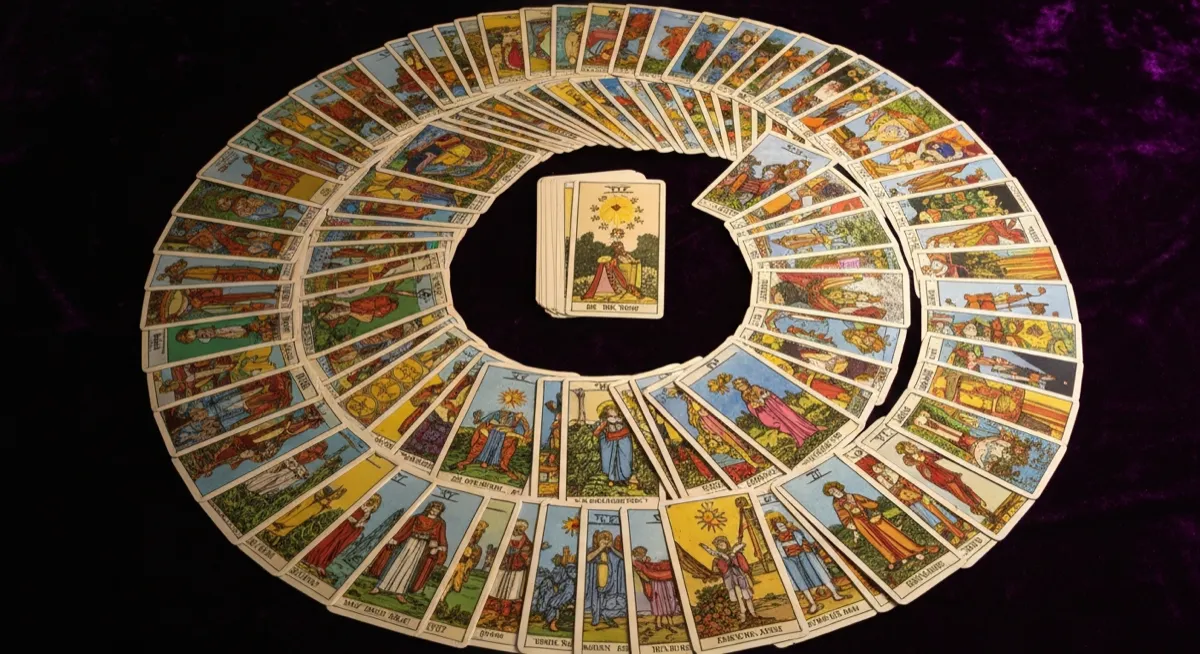
78 Cards, Two Sections
Every standard tarot deck contains exactly 78 cards divided into two distinct sections: the Major Arcana (22 cards) and the Minor Arcana (56 cards). This structure has remained essentially unchanged since the 15th century, when tarot decks first emerged in northern Italy as playing cards before evolving into a tool for divination and self-reflection.
The word "arcana" comes from the Latin "arcanum," meaning secret or mystery. The Major Arcana holds the big secrets — the profound themes and turning points of human experience. The Minor Arcana holds the smaller secrets — the daily events, emotions, decisions, and interactions that fill your everyday life. Together, they create a complete map of human experience, from the most mundane Tuesday afternoon to the most transformative moment of your life.
This 78-card structure is what distinguishes tarot from oracle cards, which have no fixed number or system. When someone says "tarot deck," they mean this specific 78-card framework. Anything else is an oracle deck, a Lenormand deck, or some other divination tool — all valid, but structurally different from tarot.
The 22 Major Arcana Cards
The Major Arcana consists of 22 cards numbered 0 through 21. They begin with The Fool (0) and end with The World (21), tracing a journey known as the Fool's Journey — a narrative arc that follows a soul from innocent beginning through every major life lesson to eventual completion and wisdom.
These 22 cards represent the big themes: love, death, justice, transformation, hope, destruction, and rebirth. When a Major Arcana card appears in a reading, it signals that something significant is at play — not just a passing mood or a minor decision, but a fundamental life experience that carries lasting impact.
The Major Arcana in order: The Fool (0), The Magician (I), The High Priestess (II), The Empress (III), The Emperor (IV), The Hierophant (V), The Lovers (VI), The Chariot (VII), Strength (VIII), The Hermit (IX), Wheel of Fortune (X), Justice (XI), The Hanged Man (XII), Death (XIII), Temperance (XIV), The Devil (XV), The Tower (XVI), The Star (XVII), The Moon (XVIII), The Sun (XIX), Judgement (XX), and The World (XXI).
Each card builds on the one before it. The Fool starts the journey with nothing but trust. The Magician discovers personal power. The High Priestess develops intuition. And so on, through challenges, triumphs, losses, and ultimately integration, until The World represents the completion of a full cycle of growth.
The 56 Minor Arcana Cards
The Minor Arcana is the larger section, containing 56 cards organized into four suits of 14 cards each. Each suit runs from Ace through Ten, followed by four Court Cards: Page, Knight, Queen, and King.
The four suits are Wands, Cups, Swords, and Pentacles. Each suit corresponds to an element and an area of life. Wands (Fire) govern passion, creativity, ambition, and energy. Cups (Water) govern emotions, relationships, intuition, and the heart. Swords (Air) govern the mind, communication, conflict, and truth. Pentacles (Earth) govern the material world — money, career, health, and physical reality.
While the Major Arcana deals with life-changing events and deep spiritual lessons, the Minor Arcana handles everything else: your mood today, the argument you had at work, the financial decision you are weighing, the new relationship that is just getting started. These are the cards that show up most frequently in readings because most of life is lived in the everyday details, not in dramatic turning points.
Understanding the four suits gives you an instant framework for interpreting any Minor Arcana card. Even if you do not know a specific card's meaning, knowing its suit tells you what area of life is involved, and its number tells you where in the cycle it falls.
The Number Pattern: Ace Through Ten
The numbered cards within each suit follow a consistent pattern that repeats across all four suits, which makes learning them much easier than memorizing 40 individual meanings.
Aces represent new beginnings, raw potential, and the purest form of the suit's energy. They are seeds waiting to be planted. Twos represent balance, duality, and early partnerships. Threes represent growth, expansion, and the first fruits of effort. Fours represent stability, structure, and sometimes stagnation. Fives represent conflict, change, and disruption — they shake things up.
Sixes represent harmony, recovery, and generosity after the upheaval of the fives. Sevens represent reflection, assessment, and inner work. Eights represent movement, power, and momentum. Nines represent near-completion, solitude, and the final push. Tens represent completion, fulfillment, and the end of a cycle — after which a new Ace begins.
This pattern means you already know something about any Minor Arcana card just by looking at its number. A Five of anything involves conflict. A Ten of anything involves completion. Combine the number meaning with the suit meaning, and you have a solid foundation for interpretation without needing to memorize individual card definitions.
The 16 Court Cards
The Court Cards are the 16 cards that sit between the numbered cards and the Major Arcana in terms of significance. Each suit has four: Page, Knight, Queen, and King.
Court Cards often represent people in your life (or aspects of yourself), and they follow a progression of maturity. Pages represent youthful energy, curiosity, new students, or messages. They are the beginners of their suit's energy. Knights represent action, pursuit, and sometimes excess. They are the doers who charge forward with their suit's energy, sometimes recklessly. Queens represent mastery through nurturing, intuition, and inward focus. They have fully internalized their suit's energy. Kings represent mastery through authority, leadership, and outward expression. They direct their suit's energy in the world.
A Page of Cups might represent a young person with tender emotions, or a new emotional beginning in your own life. A Knight of Swords might represent someone who charges into conflict without thinking, or your own tendency to act on intellectual impulses too quickly. A Queen of Pentacles might represent a nurturing figure who creates material stability, or your own ability to build a comfortable life through practical wisdom.
Many readers find Court Cards the hardest to interpret because they operate differently from numbered cards. The key is remembering that they always represent personality energy — either a person in the situation or a way of being that the reading is calling you to embody or recognize.
Why 78 and Not Some Other Number?
The number 78 is not arbitrary. In numerology, 78 reduces to 15 (7 + 8), which reduces to 6 — the number of The Lovers card, representing harmony, balance, and the integration of opposites. Some numerologists see this as the deck embodying the principle of union between all dualities.
More practically, 78 is the result of a system designed with mathematical intention. The 22 Major Arcana cards correspond to the 22 letters of the Hebrew alphabet and the 22 paths on the Kabbalistic Tree of Life. The 56 Minor Arcana cards emerge from four suits of 14 cards, a structure inherited from the playing card traditions of medieval Europe.
The number 78 is also a triangular number — the sum of all integers from 1 to 12 (1+2+3+4+5+6+7+8+9+10+11+12 = 78). This mathematical property connects it to ideas of completeness and wholeness that have been symbolically significant across cultures for millennia.
Whether you find these numerical connections meaningful or coincidental, the practical result is a deck large enough to represent the full range of human experience but structured enough to be learnable. Seventy-eight cards is the sweet spot between depth and accessibility.
Continue Exploring
More From the Blog
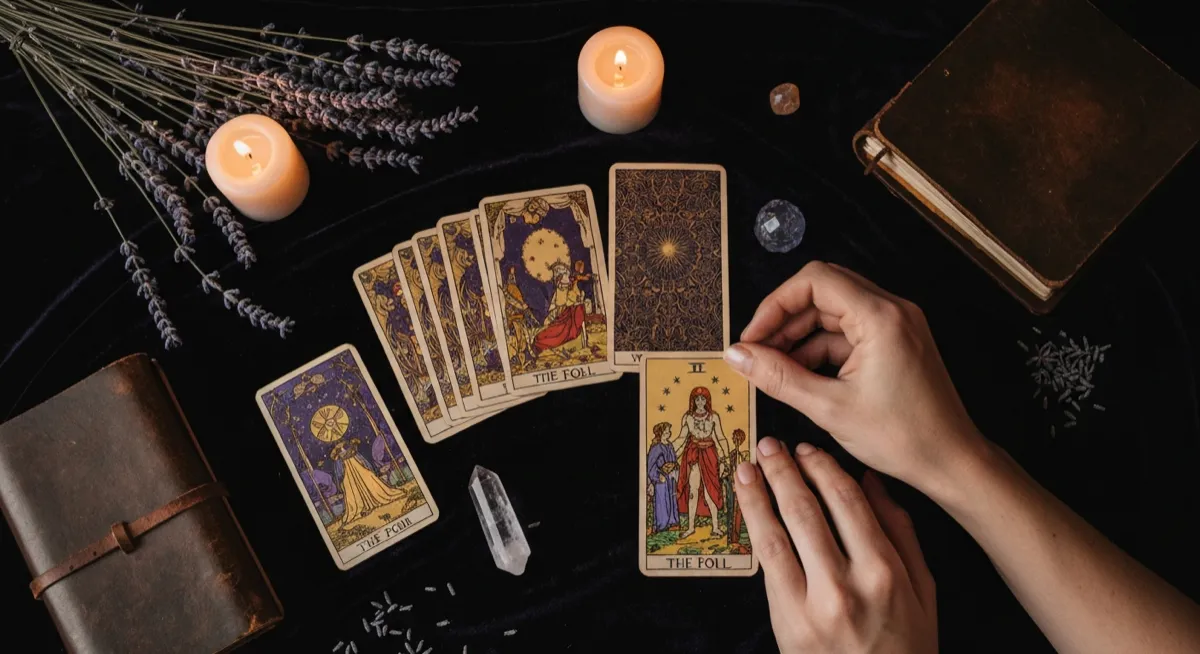
How to Read Tarot Cards for Beginners
Everything you need to start reading tarot cards today. From choosing your first deck to performing your first three-card spread, this guide walks you through each step without overwhelming you.
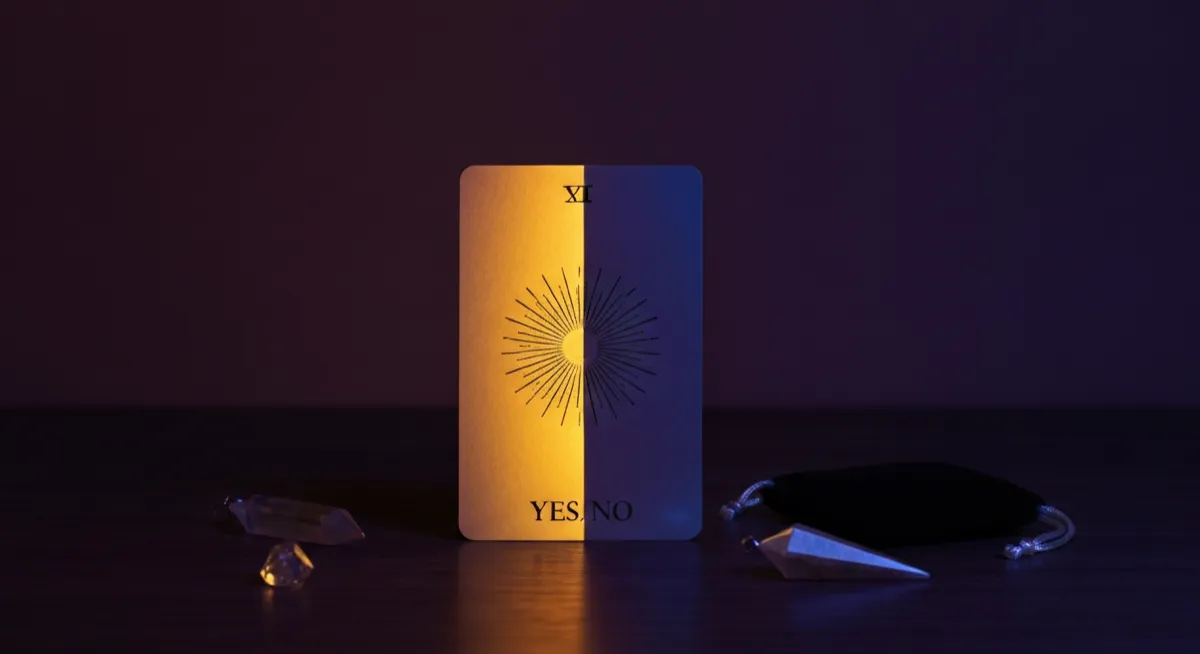
Yes or No Tarot: How It Works and What Each Card Means
Sometimes you need a straight answer. Yes or no tarot gives you one — but context matters. Learn how this popular spread works, what every card means, and when a simple yes or no is the right question to ask.
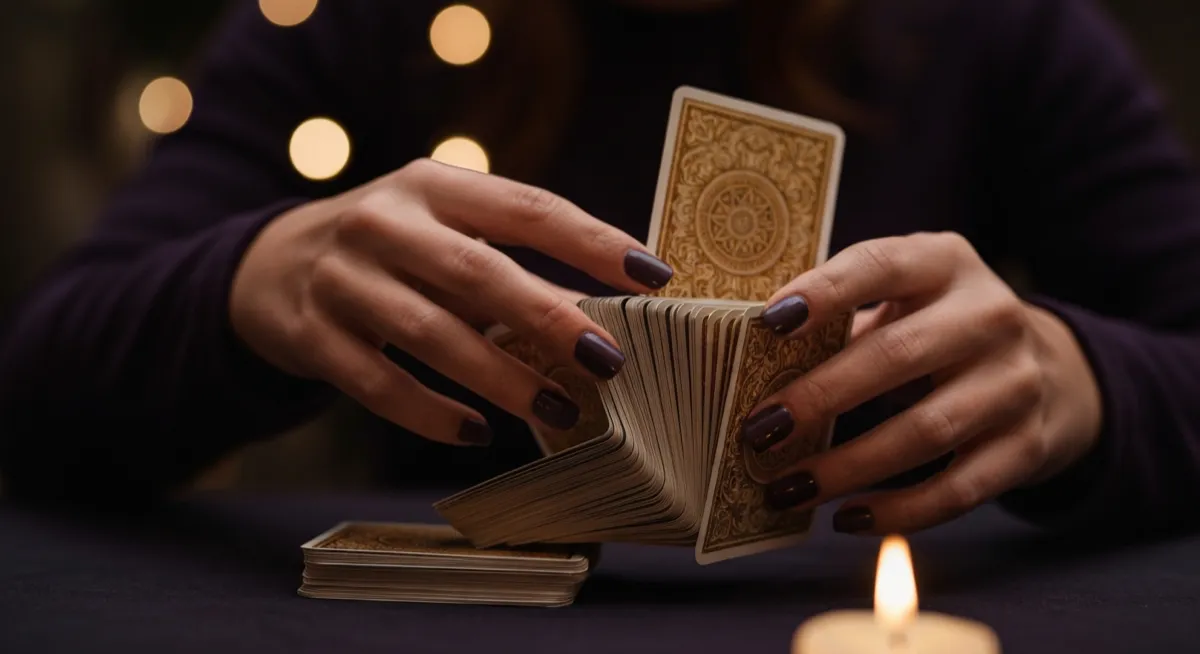
How to Shuffle Tarot Cards: 5 Methods for Every Reader
There is no wrong way to shuffle tarot cards, but some methods feel more natural than others. Here are five shuffling techniques, tips for breaking in a new deck, and how to know when to stop.